Find what's actually causing it. Move like you used to.
Maybe you avoid the stairs now if there's another option. Maybe you used to load the bar without thinking about it, and now you check in with your back first. There's a real term for that: guarding, a reflex your nervous system keeps running long after the danger that started it is gone. You know exactly what you're capable of. Most days lately, you're not it.
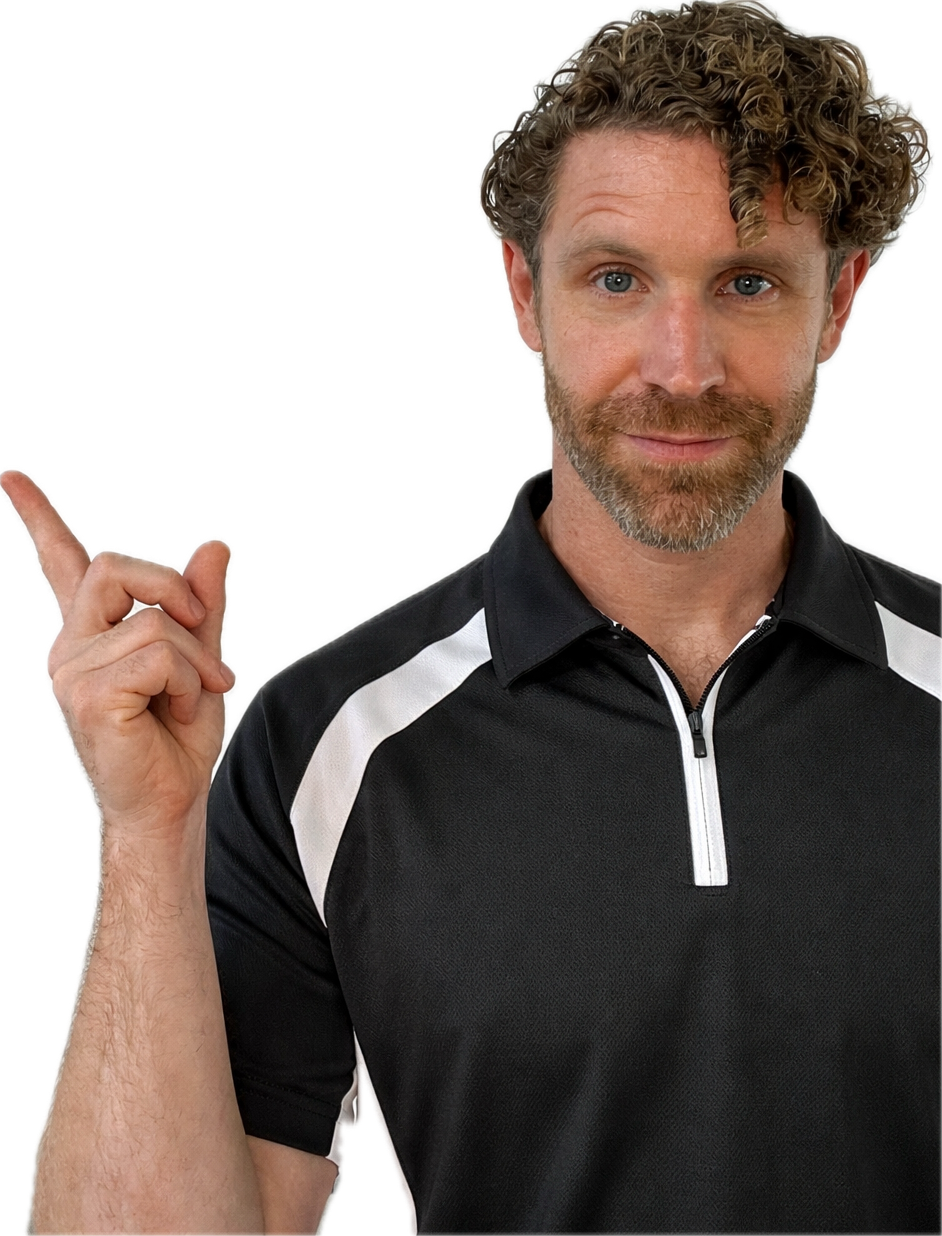
Austin, TX
$200 per session after
75 min full session
Three entry points. One direction.
The 20-Minute Reset
One area, whatever is loudest right now. Hands on, no consultation, no pitch. You feel what I actually do before you spend anything.
Right for you if you've been burned by someone who worked hard and found nothing.
Claim the Free 20The 75-Minute Opening
One session, one place you've been bracing. We find the pattern underneath it and begin the unwind. You leave different: the ache you walked in with quiets, because we worked the root it grew from.
Right for a specific restriction, or a trip through Austin.
Book a Single SessionThe 10-Session Return
The full reclamation, pattern by pattern, rebuilt from the ground up: a body that breathes fully, moves without thinking, holds itself without gripping.
Right for you if you're done chasing temporary relief.
See the Full JourneyProve it. Show me what you've got.
This is what I ask of anyone who is about to put their hands on me. Not a phone call where you tell me about your training. Not a form. Let me feel what you do for a few minutes, and then I'll know whether to trust you with the rest.
Because you already know the other version of this. Somebody works on you for a full hour. You keep your face polite the entire time. At the end you smile, say thank you, this was great, and you never book again. The smile was manners. The not-coming-back was the review.
You shouldn't have to pay two hundred dollars to find out whether I know what I'm doing.
So take twenty minutes. Free, for first-timers. Pick the loudest thing in your body and I'll show you what I find under it. If it isn't for you, you walk, and there is no pitch on the way out. If something moves that hasn't moved in years, you'll already know what the full session is.
Hands on from minute one · No consultation call · No card required
You've been carrying this long enough.
You rub the back of your neck without noticing you're doing it, another few hours hunched over your phone with your chin dropped toward your chest. Ten hours a day, most days. Your body built a habit out of guarding that spot a long time ago, for a very different kind of danger. It's still running the same program today, on information that expired years back.
Massage feels good for a day and fades. This asks more of you up front, showing up, doing the homework, feeling what surfaces, in exchange for a pattern that stays gone. If you want fast relief, there are easier options. If you want the pattern gone, keep reading.
The One Hitting a Ceiling
You still go, but you stopped walking up to the squat rack. You do the machines instead, tell yourself it's just as good. Your friend spots you loading forty-five-pound plates for someone else and says "when'd you get soft?" You laugh, say something about being busy with work. You don't tell him you tried the rack three weeks ago and something in your lower back said no in a way you're still thinking about.
The One Whose Body Is the Work
Your body is the instrument everything else runs through. When it's off, you feel it everywhere, work, mood, how present you are with people you love. You've stopped connecting the dots out loud, but you've noticed.
The One Who Says He's Busy
Someone in the group chat plans a hike and you say you're busy that weekend. You're not. Your buddy texts you later, "come on, don't be a bitch, it's not even that steep." You let him think that's the reason. The real reason is you did a shorter trail two months ago and spent the whole descent bracing your knee, and you haven't told anyone that part.
The One Who Can't Get Fully In
Your nephew wants you to get down and play cars with him. You say your back's a little off today, maybe next time. Your sister laughs and says "you're thirty-four, not eighty, get down here." You get down, because now you have to. Getting back up takes longer than you want anyone to notice, so you make a joke out of it before they can.
The average American spends 5 hours and 16 minutes a day on their phone.
At a 45-degree tilt, the head puts about 49 pounds of load on the neck. Health researchers compare it to carrying an 8-year-old on your neck for 60 hours a week. Neck pain is now the fourth leading cause of disability in the U.S., affecting close to a third of the population in any given year.
You didn't do anything wrong. You have a job, a phone, and a life that runs through a six-inch screen. Your neck just wasn't built for the angle you're asking it to hold, every day, for years.
The work goes to the root.
Your Body Stores What Your Mind Has Been Carrying
That ankle sprained at 14. The period you stopped breathing fully. Fascia, the connective tissue wrapping every structure in your body, keeps the record.
We Excavate What's Buried
You built brilliant adaptations to survive what happened to you. That adaptation costs range, ease, breath, presence. This work removes what was never supposed to stay.
Lasting Change Lives in the Nervous System
When something intense comes up in the tissue, we breathe into it together instead of bracing against it. Tension met with resistance stays. Tension met with breath moves.
Your nervous system needs repetition and rest to actually keep a change, not force. What we open in session, your body has to learn to keep, that's why the homework matters.
Staying Present Takes More Courage Than Leaving
Most of my clients already know this work will be uncomfortable before they book. Some of them love that part, because they've learned that's usually the moment something actually shifts. I'm interested in helping you stay in the room, present in your own body, instead of checking out the way you've been trained to.
"I hate you, but I love you. Thank you for what you're doing. No, don't move, you're doing it perfectly."
A regular thing clients say mid-session
Meet Remmey
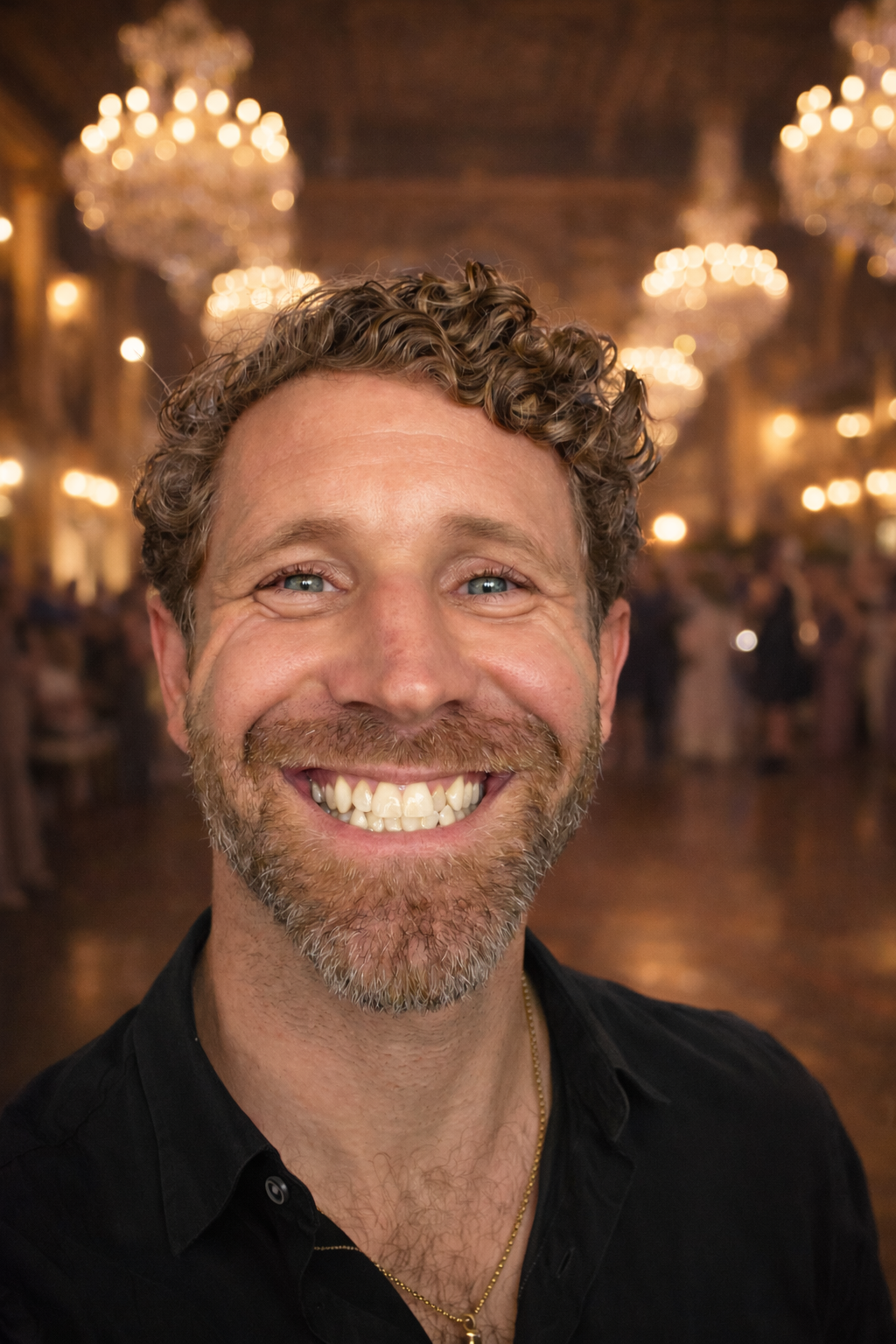
I've totaled nine cars. Not close calls, actual wrecks, actual tow trucks, thousands of dollars I didn't have, and a father who stopped handing me his keys after the third one. For years I told that story like a highlight reel: the fall in Colorado, the sixty-foot drop from a tree in India, walking away from all of it two days later. What I never told people was what walking away actually cost me.
My body got so good at protecting me that it stopped telling me the truth. A sprained ankle became a stiff one. A torn something became a spot I just quietly stopped stretching. I wasn't healing. I was translating every injury into a smaller, quieter word until I couldn't hear the real one underneath it anymore.
By 2014 I was rubbing my own shoulder every single day without noticing I was doing it. I told myself it was just tight. Then I couldn't move the way I wanted to with someone I loved, and there was no smaller word left to translate that into. She was the one who finally said it: you should get that looked at. I said okay because I'd run out of ways to pretend it was nothing.
We adapt to survive. But adaptation has a cost, and mine had been quietly billing me for years before I ever looked at the invoice.
That's the year I actually started dealing with what I'd spent a decade storing instead of feeling. I've been doing this work formally ever since, as a certified hypnotherapist starting in 2014, and as a structural bodyworker since 2021. In that time I've worked with hundreds of clients, one-on-one and in groups, helping them find their way back into a body that finally feels like home.
Everything I do in a session now comes out of learning this the hard way, in my own body, first. I'm here to help you find yours.
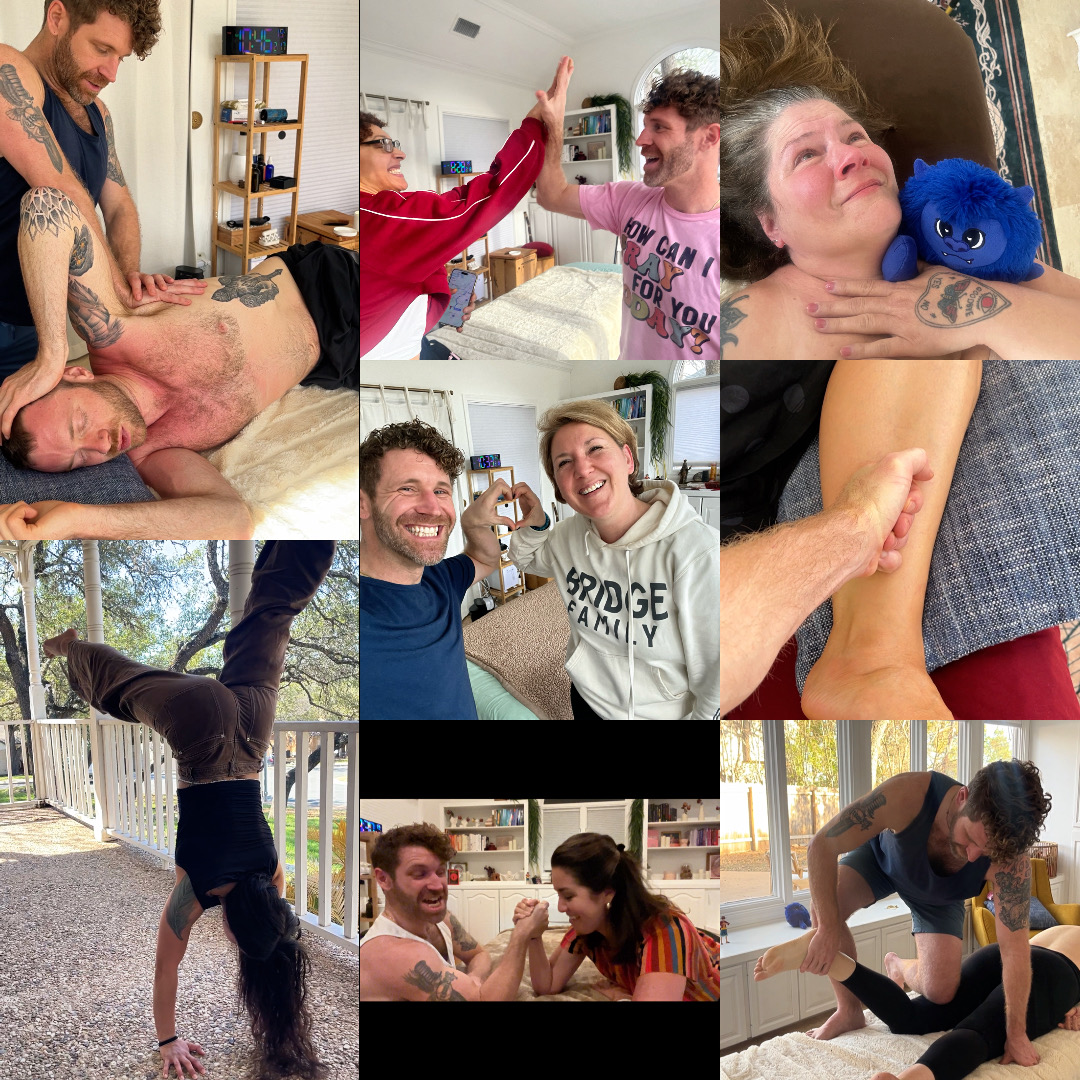
Here's the part nobody puts on a bodywork website.
Most of us are basically interchangeable. Strong hands, some training, a candle. If all you needed was pressure on a sore spot, a tennis ball and forty minutes on your living room floor gets you most of the way there. YouTube has a video.
What a tennis ball doesn't do is make you laugh right when you're about to tense up and leave your body entirely, which is usually the exact moment something actually starts to move. I sing sometimes, mid-session, badly, on purpose. If it's useful to you, I'll bring in a few minutes of hypnotherapy, not to be mystical about it, just because sometimes the fastest way into a stuck shoulder is through the mind that's been guarding it. This comes from fifteen years of learning that people heal fastest in a room where they're still allowed to be a little ridiculous while something real is happening to them.
If you want someone quiet and clinical, I'm probably not your guy. If you want someone who can hold your leg at an angle you didn't know it bent to, get you laughing hard enough that you forget to brace, and then very seriously ask you to breathe into ten years of held tension, that's this. That's the whole pitch.
Someone finally found it.
What happens when you come all the way back into your body
The journey in.
Opening: Permission to Exhale
We begin at the surface because your body needs to know it's safe before it will let you go deeper.
| SESSION 01 · BREATH | Intercostal tissue and thoracic fascia, opened to restore full respiratory movement. Most people are breathing at 40% capacity and call it normal. |
| SESSION 02 · GROUND | Plantar fascia, ankle mortise, tibial rotation. When the foundation reorganizes, hip and knee issues blamed on "tightness" often disappear. |
| SESSION 03 · LINE | The lateral fascial chain from IT band through QL into the cervical spine. You'll feel taller without trying. |
Space. Lightness. Your chest opens when you walk. Your body stops fighting gravity and starts working with it.
Core: The Deep Undoing
Now we go where the pattern actually lives, the structures holding your fight-or-flight response.
| SESSION 04 · LIFT | Adductors and pelvic floor. When this reorganizes you'll feel power you forgot you had. |
| SESSION 05 · SPACE | Psoas and anterior spine, where unresolved activation lives. The session people say changed everything. |
| SESSION 06 · SUPPORT | The entire posterior chain. Like someone removing a backpack you forgot you were wearing. |
| SESSION 07 · CLARITY | Head, neck, jaw, including intraoral work. The whole nervous system quiets in a way nothing else replicates. |
You breathe from your belly now. Your jaw unclenches at night. You're starting to trust the body again.
Integration: The Whole Body Remembers
The final three sessions teach your body to move as one coordinated, alive system.
| SESSIONS 08–10 | Full integration. Upper meets lower, left meets right. You stop being someone who had good sessions and become someone who simply lives this way. |
You move without managing it. You're alive, fully, in the body that was always yours to inhabit.
"Every other bodyworker moved on too fast. He held it until it actually let go."
Richie V. · Gymnast
The container
The pattern changes. The results hold.
Most people have spent years chasing symptoms, massage, chiro, PT, each helping a little, none of it holding. This series addresses the root, so the symptoms don't come back.
Start with one session, so you feel what this is for yourself instead of taking my word for it. One session tells your nervous system something ten sessions can't tell it in words. Most people who take that first step don't stop at one.
I read every request before I confirm it. This work asks something of you, and it does not suit everyone who wants it. If you are not the right fit, I will cancel the appointment, text you the reason myself, and refund you in full the same day. No charge, no runaround.
I would rather lose the booking than take your money for something I do not believe will hold.
What This Requires From You
- →After each session: a 15–20 minute walk. Witnessing, not exercising.
- →Daily homework: 5–10 minutes teaching your nervous system this new pattern is safe.
- →Permission to feel what surfaces. Old patterns don't release quietly. When something comes up, we breathe through it together instead of fighting it.
- →Presence. Show up and be willing to feel.
I bring precision. You bring presence. Together, we bring you home.
The things people actually ask me.
Does it hurt?
Sometimes, and never pointlessly. There is a difference between pain that means damage and sensation that means something long-held is finally moving. You will learn the difference fast, because I will keep asking and you get to answer honestly.
What I will not do is grind on you to prove I am working. Force makes tissue guard harder. If you want someone leaning through your back with an elbow for an hour, that is a different appointment at a different studio.
How is this different from a deep tissue massage?
A massage goes where it hurts. This goes where the pattern started, which is often nowhere near where it hurts. Your neck may be screaming because your ribs stopped moving three years ago and your head has been compensating ever since.
Clients tell me the difference they notice is strategy. I am reading how you are organized and working the chain, in an order, over time. The goal is the pattern. Relief tends to follow on its own.
What is the free twenty minutes, honestly?
It is exactly what it sounds like. You come in, we pick the loudest thing in your body, and I work it. Hands on from the first minute. No intake interview, no card on file, no pitch at the end.
I offer it because I would want it. You should not have to pay two hundred dollars to discover whether a stranger knows what they are doing with your body.
Do I have to commit to all ten sessions?
No. Nobody starts on ten. Most people take the free twenty, then book a single seventy-five, and decide from there with actual information instead of a sales page.
The series exists because structural change is cumulative. You never owe me a commitment, and it is the same $200 a session either way.
I am not an athlete. Is this for me?
Most of my clients are not competing at anything. What they share is that their body is in the way of something they care about, and that they have already tried the easy versions without it holding.
If you sit ten hours a day and your neck has opinions about it, you are squarely who this is for.
What do I wear?
Athletic shorts, and a sports bra or a fitted tank if that suits you. I need to see how you're organized and to reach the tissue directly, so come in what you'd stretch in.
Where are you, and is parking a problem?
1909 Winter Park Rd, Austin, TX. Private studio, free parking on site, no garage to circle and no meter to feed.
Do you take insurance, HSA or FSA?
I do not bill insurance. Many clients successfully use HSA or FSA funds for bodywork, and I will provide an itemized receipt for your submission, though whether it is reimbursed is between you and your plan administrator. Check with them before you assume it is covered.
What if I need to reschedule?
Give me 24 hours and there is no issue, just move it in the confirmation email. Inside 24 hours, text me and we will work it out like adults. Life happens, and I would rather you come when you can actually be present than force a session you are not in.
How soon will I feel something?
Usually in the first session, often in the first twenty minutes. Whether it holds is the real question, and that depends on the walk afterward and the five to ten minutes a day in between. Openings are easy. Keeping them is the work.
Life expectancy in the U.S. is 79. You don't get a second set of these years.
You'll spend close to a third of that asleep. Most of the rest belongs to a desk, a commute, or somebody else's schedule. What's actually left, the years you're upright, capable, and free to use however you want, is a narrow window. You're standing in it right now. Nobody tells you when it closes. You just notice one day that you stopped trying the things you used to try.
Here's the part worth being honest about. The reason you haven't started isn't laziness. Some part of you learned that pain means danger, so it built a habit of avoiding anything that might bring it back, the rack, the trail, the floor. There's an actual term for this in sports medicine: guarding, involuntary muscle contraction that persists long after the original threat is gone. It's protection working exactly as designed. It's also running on information that's years out of date. So ask yourself directly, not someday, today: what would have to happen for you to stop guarding against a threat that isn't there anymore?
You were built to inhabit yourself, fully alive in your own skin.
The guarding served you. It also isn't yours to carry forever. Take the free twenty minutes. Twenty minutes tells your body something no amount of reading ever will.
Start With 20 Free Minutes →